

 Supply
 The implementation of the UK Media Act 2024 marks a decisive shift for the streaming landscape – one that aligns regulation with how UK audiences actually watch TV today. Through newly laid secondary legislation, the government is bringing the largest video on demand (VoD) platforms under enhanced Ofcom oversight, creating a more consistent and accountable regulatory environment.
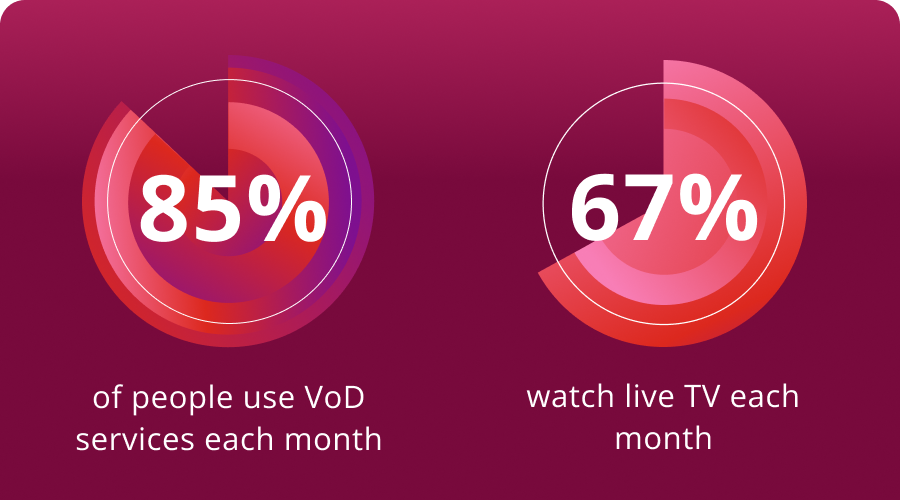
This move reflects a new reality: on demand viewing now eclipses live TV for most audiences. According to Ofcom’s Media Nations reporting, 85% of people use a VoD service each month, compared with 67% who watch live television. Two thirds of households subscribe to at least one of Netflix, Amazon Prime Video, or Disney+.
As the UK government notes, many younger viewers now go straight to streaming when they sit down to watch something – bypassing channels entirely. The Media Act recognises that the platforms used most often should be held to standards consistent with those governing traditional broadcasters.
A new VoD Standards Code
Tier 1 services will be required to follow a VoD Standards Code, closely mirroring Ofcom’s existing Broadcasting Code.
Crucially, audiences will gain new rights to complain directly to Ofcom about content on Tier 1 platforms – a notable change for services not previously subject to UK broadcast-style oversight. Ofcom will then have investigatory and enforcement powers, including the ability to issue fines of up to £250,000 or 5% of qualifying revenue per breach.

Accessibility becomes a baseline, not a differentiator
Perhaps the most transformative part of the Media Act is the introduction of a mandatory VoD Accessibility Code. Under this framework, Tier 1 services must ensure that at least:
- 80% of their catalogue is subtitled,
- 10% is audio described, and
- 5% is signed.
For millions of deaf, hard-of-hearing, blind and partially sighted viewers, this marks an important moment: the introduction of consistent, enforceable minimum standards across major streaming environments.
Many in the industry have already taken steps to increase accessibility, but until now commitments have varied between services. The Accessibility Code helps address that inconsistency – establishing a level playing field and ensuring that audiences can expect similar protections regardless of where they watch.
"The Media Act sets a clear, consistent baseline for streaming accessibility in the UK for the first time.”
A timeline for change
The Act sets out a staggered transition period:
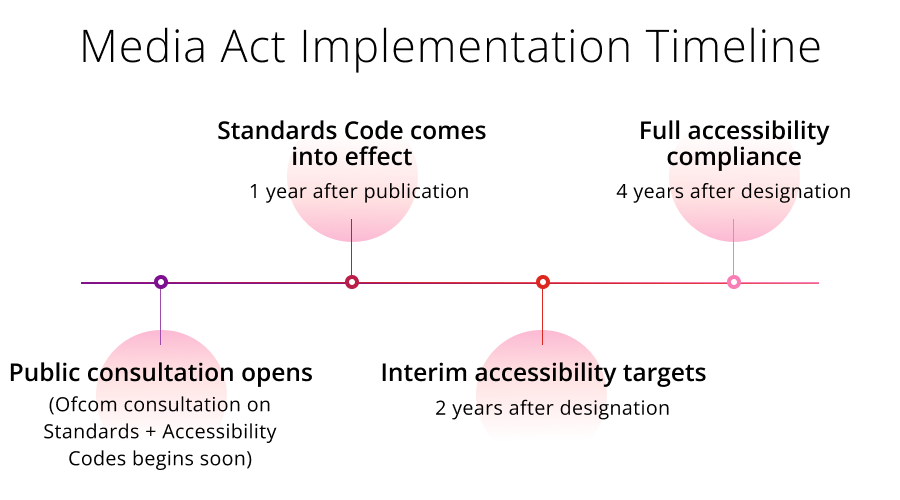
- Ofcom will shortly open a public consultation on both the Standards Code and Accessibility Code.
- The finalised VoD Standards Code will come into effect one year after publication.
- Tier 1 services will have four years to meet the Accessibility Code requirements, with interim targets after two years.
This timeline provides space for platforms to adapt, but it also creates a clear accountability structure. The transition is not simply about meeting regulatory obligations – it’s about building resilient, scalable content operations fit for the future.
Why the change matters
The government’s position is clear. As Culture Secretary Lisa Nandy says:
“By bringing the most popular video-on-demand services under enhanced regulation by Ofcom, we are strengthening protections for audiences, creating a level playing field for industry and supporting our vibrant media sector that continues to innovate and drive growth across the UK.”
For the industry, these changes acknowledge that streaming services now play a central role in shaping public trust, media literacy, access, and representation. Regulation is catching up to that reality.
The operational impact: accessibility at scale
Meeting accessibility minimums at catalogue level demands a shift in approach. To comply effectively, platforms will need deeper integration across:
- compliance,
- access services workflows, and
- quality control systems.
In practice, this means accessibility can no longer be treated as a final stage addon. It must be built into the heart of content operations – from commissioning through to versioning, supply chain orchestration and delivery.
As Tom Wootton, Head of Access Services, explains, “The Media Act sets a clear, consistent baseline for streaming accessibility in the UK for the first time. That’s good for audiences, and it’s good for the industry. Red Bee Media has been delivering subtitling, audio description and signing services at scale for over two decades. We understand what it takes to make accessibility a seamless part of content delivery, not an afterthought.
“Streaming also opens up genuine opportunities to improve the accessibility experience for audiences in ways that broadcast infrastructure doesn’t always allow, whether it’s zero latency live subtitles or more presentation flexibility. The platforms that move early and build the right foundations will be best placed to meet both the letter and the spirit of what the Act requires.”
This aligns with where much of the industry is already heading, but the Act formalises the need for greater operational maturity.

How Red Bee Media supports this transition
At Red Bee Media, we’ve spent more than 25 years delivering largescale subtitling, audio description and signing services for some of the world’s largest broadcasters and content owners. We understand the operational demands of accessible content – not just as a compliance requirement, but as an essential part of delivering high-quality viewing experiences.
With the introduction of the Media Act, we are uniquely positioned to help platforms:
- scale subtitling, audio description and signing efficiently
- integrate access services into existing workflows
- maintain quality, accuracy and resilience across large libraries
- prepare for future Ofcom reporting and compliance cycles
The transition ahead is significant – but it is also an opportunity to create more inclusive, more trusted, and more competitive streaming experiences in the UK.
If you’d like to explore what the Media Act means for your platform, we’d be happy to help you navigate what’s changing.